| Feature | Quebec example | Planning use |
|---|---|---|
| Ownership built around a shared need | Villagers in Baie-Johan-Beetz formed a co-op after the only store closed in 2005 | Start from the problem members share. The co-op is the tool for solving it, not the goal. |
| Member pricing | Panier Futé offers members fruit and vegetables for 15 to 20 percent cheaper than market price | Compare the member price with the current market price before committing. |
| Mixed staffing | The Baie-Johan-Beetz co-op has three full-time employees supported by about a dozen volunteers | Expect member time and goodwill to be part of how a small co-op runs. |
| Federation of local co-ops | La Coopérative Fédérée de Québec federates local farm cooperatives into a central organization | Check whether a local co-op belongs to a larger federation when judging its reach. |
Details come from Geo.coop’s report on Quebec food co-ops and a RePEc paper on La Coopérative Fédérée de Québec.
What is a farming cooperative in Quebec? A coopérative agricole is a business owned jointly by the farmers who use it, run to serve those members rather than outside shareholders, and often linked with other co-ops through a federation.
For the wider picture, the guide to agricultural cooperatives in quebec connects the topics below. Here the focus is on what the term means and what membership changes for a farm.
What membership changes for a farm
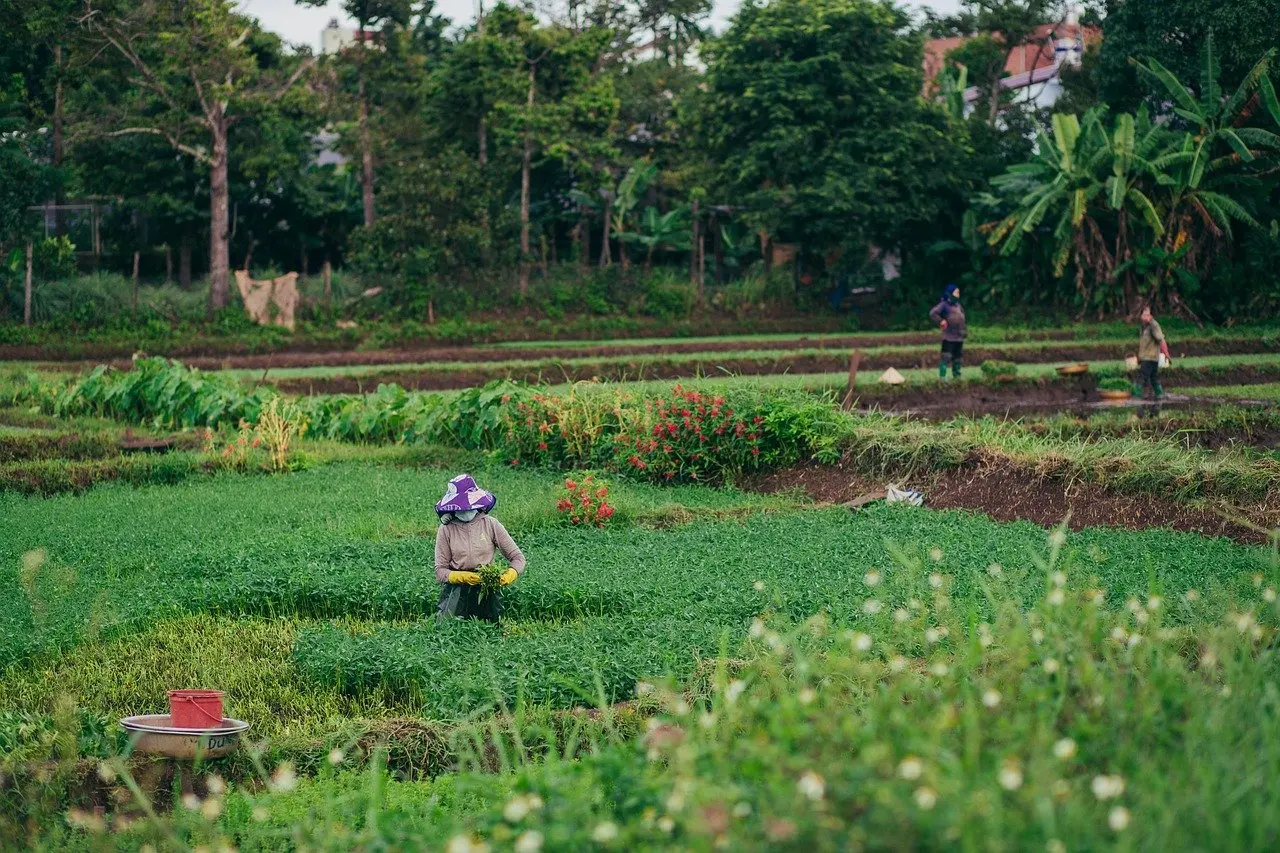
Joining a farming cooperative changes the farm’s relationship with the business more than it changes the farm itself. Picture a vegetable grower who keeps full control of the land, the crops and the daily decisions. Through the cooperative, that grower also becomes a part-owner of a shared business that handles a task which is hard to do alone. The grower is a member, not just a customer, and carries both the benefits and the responsibilities of ownership.
This illustration is not a specific farm. Co-ops differ in the services they offer, so the practical effects below are decisions to weigh, not guarantees.
- Ownership instead of a supplier relationship. A member holds a stake in the business that serves the farm. That stake brings a say in how the co-op is run, which an ordinary customer of a company does not have.
- Shared effort. A co-op can only work if members take part. Small co-ops in particular lean on member time, as the Baie-Johan-Beetz example shows, where a handful of paid staff rely on volunteers.
- Prices tied to the members’ benefit. The co-op’s aim is to serve members, so members can reasonably expect it to be judged on what it does for them, not on returns to outside investors.
- Obligations alongside rights. Membership usually comes with rules. Read the co-op’s bylaws and membership terms before joining, and ask what members are expected to contribute.
English and French terms
In French, the standard phrase is coopérative agricole, which translates directly as agricultural cooperative or farm co-op. People shorten it in conversation to coop. A search such as “coopérative agricole Québec c’est quoi” is asking the same question as “farm co-op meaning” in English: what kind of organization is this, and who owns it?
The short answer is that a farm co-op is a member-owned business serving farmers. Its members are the people who use its services, and they control it together. Related words are worth keeping apart. A membre is an owner-user, while an assemblée générale is the meeting where members exercise that ownership. A fédération is a body that brings several local co-ops together.
For the strict legal definition and the formal duties of a cooperative, the reference is Quebec’s cooperatives legislation, which sets the framework a co-op must follow. Everyday descriptions, including this page, are a plain-language guide to that framework rather than a substitute for it.
How a cooperative differs from an ordinary business
A cooperative differs from an ordinary business in who owns it and who it is for. In an ordinary company, shareholders own the business and its purpose is to return value to them. In a cooperative, the people who use the business own it, and its purpose is to meet their shared needs.
Purpose set by the members’ needs
The Baie-Johan-Beetz case shows how this works. According to Geo.coop, villagers formed a co-op after the only store closed in 2005, and one of them put it plainly: “We realized fairly quickly that a co-op was the only way to go.” The co-op was not created to find a market gap for investors. It was created because the community needed a grocery and had no other way to keep one. This example concerns a village food store rather than a farm, but the logic of ownership by users is the same.
Member benefit instead of investor return
The benefit to members can be concrete. The same report describes Panier Futé, where members get fruit and vegetables for 15 to 20 percent cheaper than market price. That is the kind of result a co-op can aim for when the members themselves are its priority. It describes one co-op, so it should not be read as a promise from every cooperative.
Labour that includes volunteers
Ordinary businesses typically pay for the work they need. Co-ops often combine paid staff with member effort. The Baie-Johan-Beetz co-op has three full-time employees supported by about a dozen volunteers. For a prospective member, this is a practical point: asking how much time the co-op expects from members is as important as asking what it costs.
Local co-ops and their federations
Local farm cooperatives can join together in larger organizations. A RePEc paper on La Coopérative Fédérée de Québec describes this model as federating similar types of local cooperatives into a central organization. Each local co-op keeps its own members, while the federation gives them a shared, larger structure. The practical implication is that a small local co-op may be part of something bigger than its own membership suggests. When assessing a co-op, find out whether it sits within a federation and what that connection provides.
They serve people who eat and shop, whereas a farming cooperative is built around the farmers who grow. Reading about both helps in seeing how the model applies across the food chain.
Where to go next
Readers who want to see where co-op food is sold directly to the public can look at farmers markets in quebec, which sit next to the co-op world in the local food scene. Readers thinking about forming a group of their own should continue to how to start a farming cooperative in quebec, which covers the steps in order.
Frequently asked questions
Is a food co-op the same as a farming cooperative?
No. A food co-op is built around the people who buy and eat food, as with the community stores described by Geo.coop. A farming cooperative is built around the farmers who produce it. Both share the member-owned structure.
Who owns and controls a farm cooperative?
Its members do. They are the farmers who use its services, and they exercise control together, typically through a general assembly rather than through outside shareholders.
Is there a province-wide body for Quebec farm co-ops?
La Coopérative Fédérée de Québec is described by RePEc as a Montreal-headquartered federation of local farm cooperatives. It is one example of how local co-ops organize together.
Does a cooperative always have only paid employees?
No. Some co-ops combine paid staff with volunteers, so members should ask what time commitment is expected.