A shopper meets “aliments trigone” in a search result and wonders whether it is a label or a type of food. It is neither: Aliments Trigone is a Quebec company that processes organic grains.
The name often turns up beside co-op shelves and basket offers, so it helps to separate the company from the marks that actually guarantee local or organic origin. The wider picture of buying through a food cooperative quebec is covered in the hub guide, and the sections below sort fact from assumption.
A company name, not a product category
Aliments Trigone Inc. appears in a hemp industry directory as a Canadian processor dedicated to organic grain processing since 1984. The same listing says the business was created in response to the needs of food co-operatives and natural foods collectives, with the aim of supplying Quebec-grown grains. That origin explains why the name is familiar to people who shop through co-ops and local food networks.
A regional inn’s portfolio page gives a consistent picture. It describes Aliments Trigone as specializing in the processing of certified organic grains that are guaranteed gluten-free. Both pages treat the name as a business, not as a recipe style, a grade or a certification scheme. A reader who sees the words on a package should therefore read them as a maker’s name.
The contrast with real labelling programmes is easiest to see side by side.
| Point of comparison | Aliments Trigone | Aliments du Québec marks | Planning use |
|---|---|---|---|
| What it is | A company processing organic grain since 1984 | A promotion body for Quebec agri-food since 1996, with labels since 2009 | Treat the first as a maker to look up and the second as a mark to look for on the package. |
| Origin rule | Created to supply Quebec-grown grains to food co-operatives | Minimum 85% Quebec-based ingredients, with processing and packaging in Quebec | A company’s purpose is not a labelling rule. Rely on the mark for a defined origin threshold. |
| Organic claim | Specializes in organic grain processing | Organic variant from 2013, with CARTV verifying authenticity | For an organic claim, check which body stands behind it. |
Figures come from the hemp industry directory listing and from Aliments du Québec’s guide to local certification marks.
Misreadings about local and organic labels
Most confusion around the term comes from assuming that a familiar name guarantees something a label would normally guarantee. Four assumptions deserve correcting.
- “Trigone” is not a certification mark. Local marks are issued under Aliments du Québec, which has supported local agri-food businesses since 1996 and has used labels since 2009, according to its own guide. A product from any company, Trigone included, shows that status only if the mark itself is printed on the package.
- “Local” does not mean every ingredient is from Quebec. The main mark requires a minimum of 85% Quebec-based ingredients, with processing and packaging in Quebec. Minor ingredients such as herbs, spices, flavours or preservatives may come from outside the province. The preparation label adds that ingredients must be local when they are available in Quebec in sufficient quantity. This matters for mixed products more than for single grains.
- Organic status is verified by a separate body. The organic variant of the Aliments du Québec mark dates from 2013, and CARTV verifies the authenticity of Quebec organic products. A processor describing itself as organic is a different thing from a package carrying that verified mark, so the mark is the better evidence at the shelf.
- Descriptive words were not always protected. In 2004 the Quebec government announced stickers that let certified small farms use the terms du terroir, artisanal and fermier, as reported by IATP. That report notes the program did not stop large companies, or anyone else, from using the same words. At a farmers market, the sticker carries more weight than the word alone.
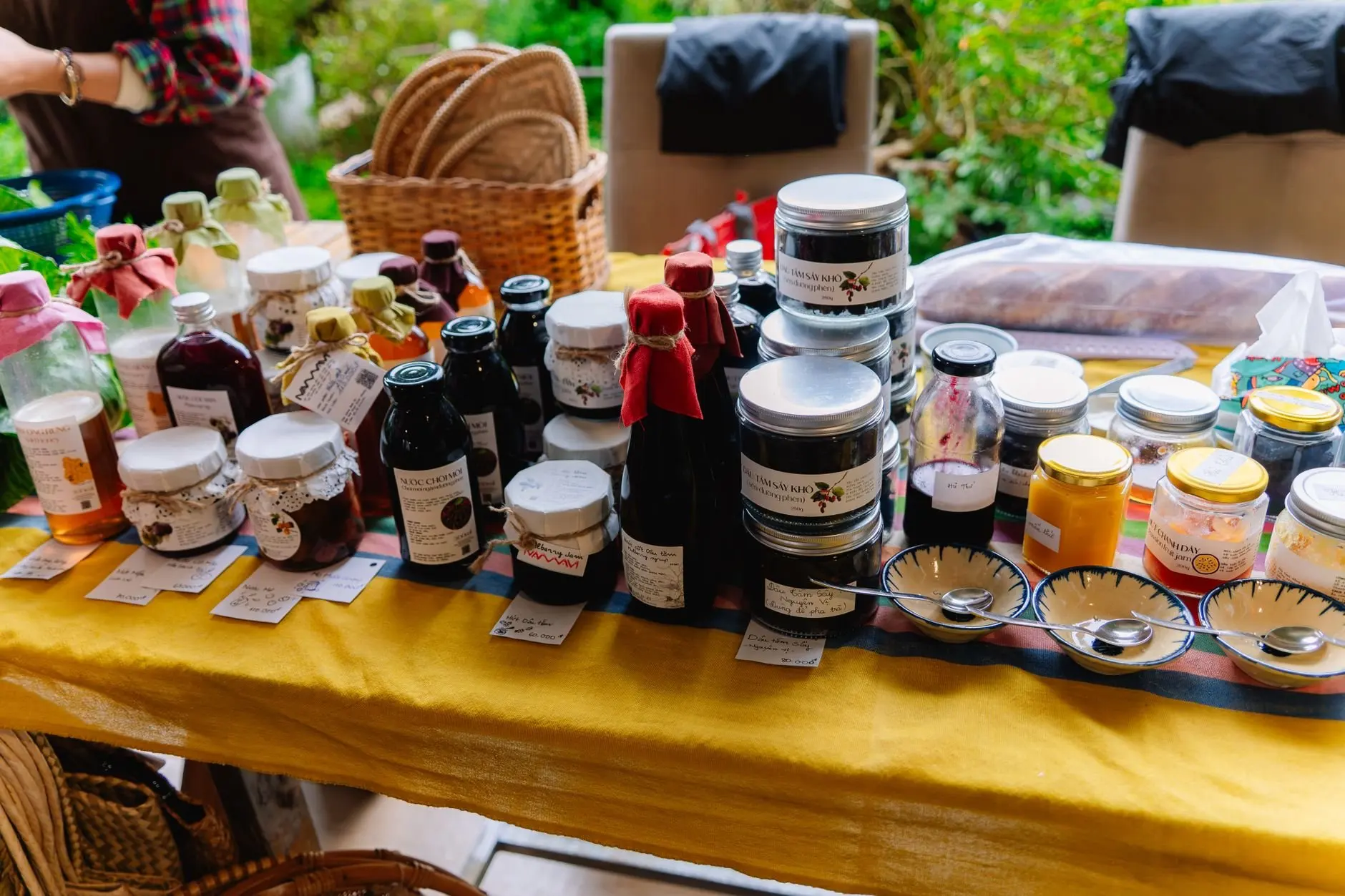
The 2004 terms are worth understanding because they still appear on jars and bags. The same IATP report defines a produit du terroir as a food product strongly linked to a region or locale and made with traditional know-how. A produit artisanal is made from local raw materials using non-industrial methods, with the artisan involved throughout. For a produit fermier, animals must be fed grain grown on the same farm. Those definitions describe what the stickers were meant to certify, which is useful context when reading the wording on a stall.
The grains behind the name
Knowing what the company actually handles makes the name easier to place. The directory lists its specialties as hemp, black and green buckwheat, amaranth, sorghum, chick peas and brown rice. These are mostly whole grains and seeds sold as ingredients, which suits cooks who build dishes from raw staples more than shoppers looking for ready meals.
The gluten-free guarantee in the inn’s listing is the detail most likely to affect a purchase. For anyone avoiding gluten, the guarantee on the package itself is what matters, and the product’s own label should be read before it goes into a basket. For everyone else, the organic grain focus and the co-op origin are the relevant features. They fit Quebec cuisine’s turn toward local staples and sit comfortably within the local food system that co-ops and short supply chains aim to strengthen.
Where the products are sold in Quebec
According to the inn’s listing, Aliments Trigone distributes its products in nearly 300 points of sale in Quebec. Given the company’s origin, co-operatives and natural food shops are the natural places to start looking, and a store’s own staff can usually say whether a grain on the shelf comes from this processor.
The same page also records the products on the menu of a restaurant chef, Olivier, which shows the grains being used in professional kitchens as well as sold for home cooking. That is a separate matter from the Aliments du Québec figure of more than 670 restaurants and food service establishments certified under its programme. That number describes the certification scheme and should not be read as a count of venues using this company’s grains.
Checking a product before it goes in the basket
A short routine settles most doubts about an unfamiliar name.
- Find the claim on the package. Note whether the wording says local, organic, artisanal or simply names the maker.
- Match the claim to the body behind it. Local origin points to the Aliments du Québec marks, and organic authenticity points to CARTV verification, as described above.
- Read the ingredient list for mixed products. Single grains are straightforward, while blends are where minor imported ingredients can appear.
- Ask the seller for the producer’s name. At a market stall or co-op counter, staff can connect a jar or bag to its processor and say whether it comes from this company.
When the package shows only a company name and no mark, the product may still be good, but the name alone is not evidence of origin or organic status.
Frequently asked questions
| Question | Answer |
|---|---|
| Is there any independent source describing the term? | Third-party pages, such as a hemp industry directory and a regional inn’s portfolio page, describe Aliments Trigone Inc. as an organic grain processor. They present it as a company name, not as a defined product term. |
| Where is the company based? | The directory lists it in Saint-François-de-la-Rivière-du-Sud, Quebec. |
| Is it sold outside Quebec? | The inn’s listing says products are also distributed in Toronto, Vancouver and on the US West Coast. |
| How long has it operated? | The directory dates its organic grain processing to 1984. The undated inn listing describes it as established for about 30 years. |